

Your consumer goods news from the world
Provided by AGP
AndaSeat Graduation Season Sale Highlights Kaiser 4 as Multi-Device Desk Use Reshapes Upper-Body Support Needs
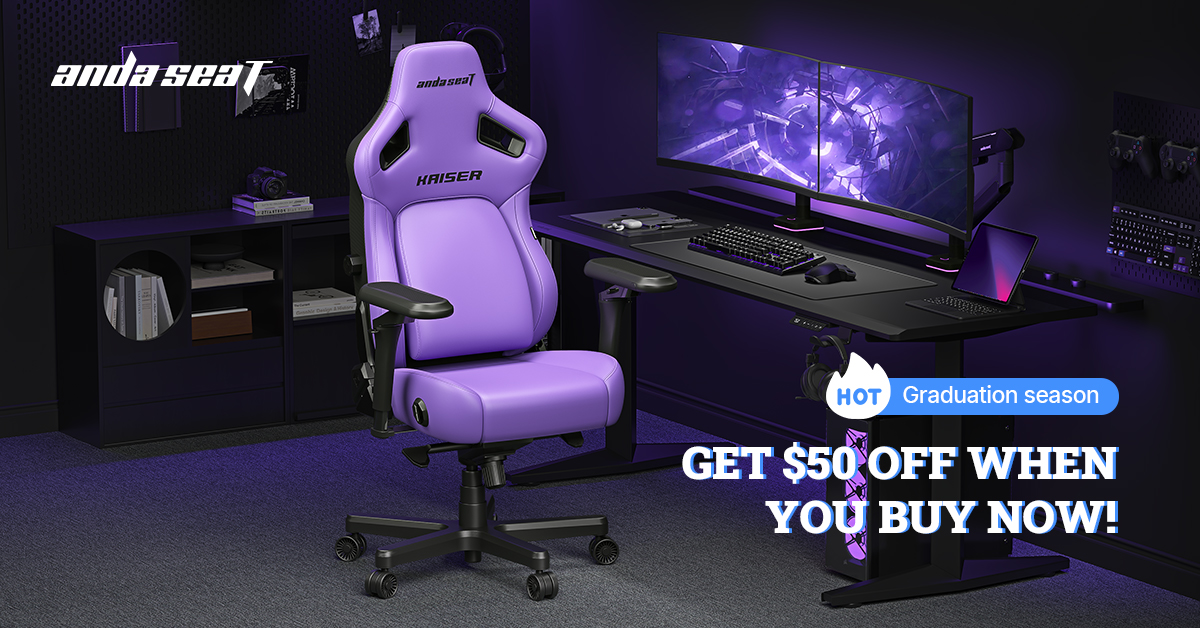
2026 Graduation Sale AndaSeat Kaiser 4
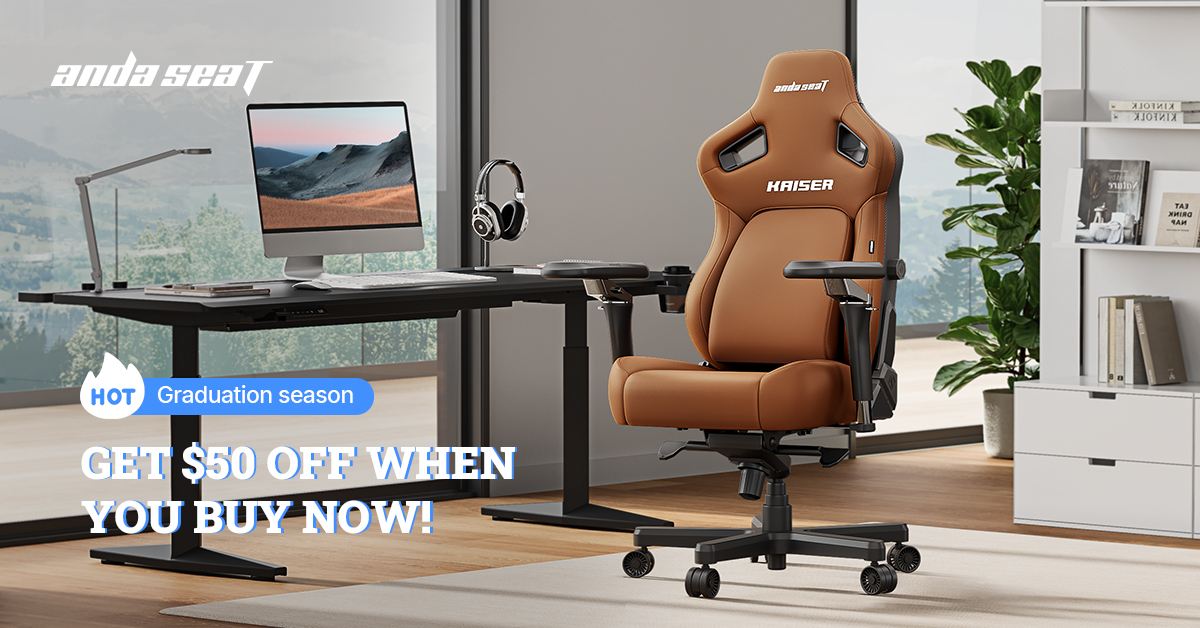
2026 Graduation Sale AndaSeat Kaiser 4 Brown COLOR
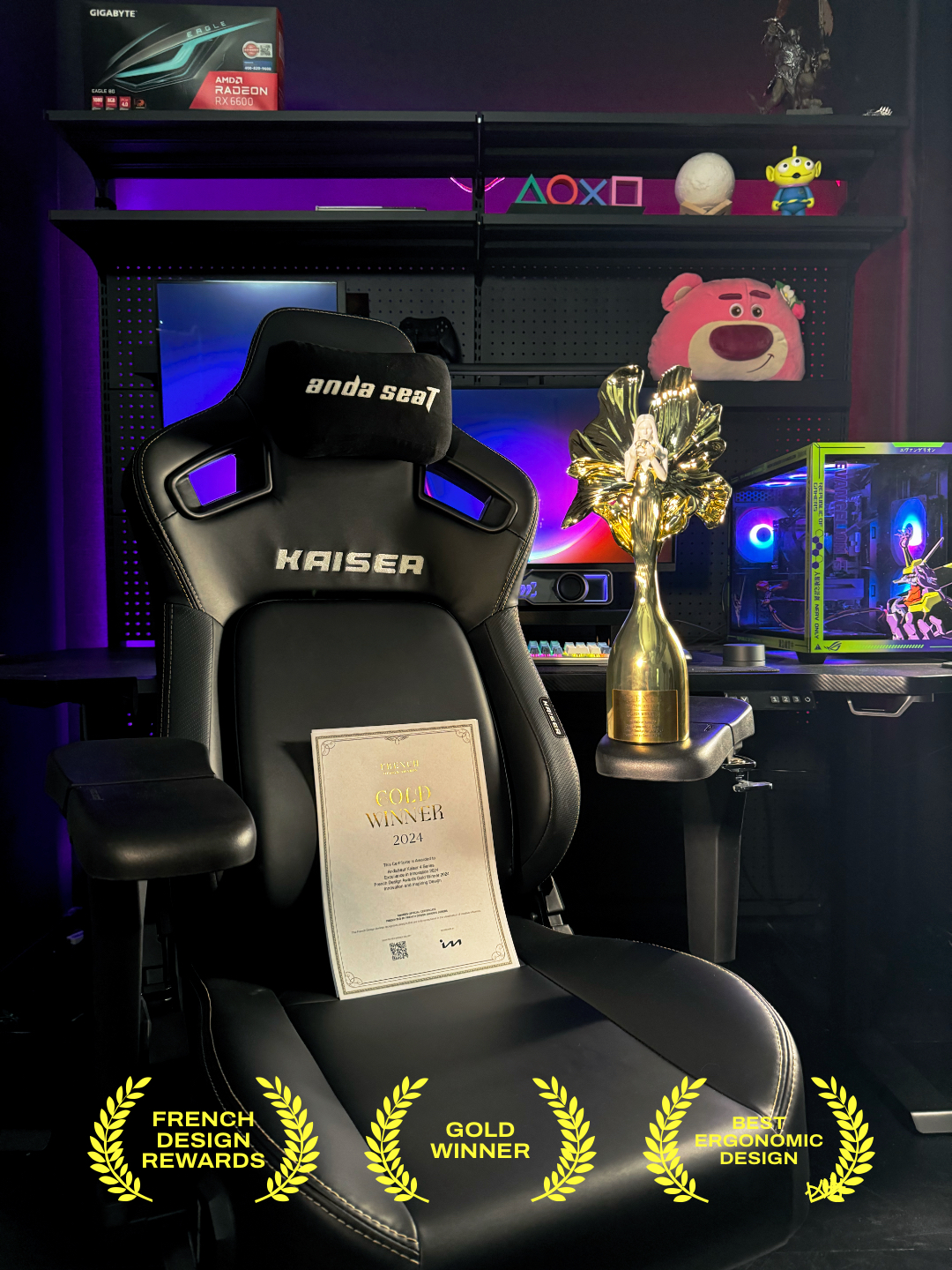
AndaSeat Graduation Season Sale Highlights Kaiser 4 as Multi-Device Desk Use Reshapes Upper-Body Support Needs
SPOKANE, WA, UNITED STATES, May 7, 2026 /EINPresswire.com/ -- AndaSeat has launched its Graduation Season Sale, featuring sitewide savings of up to $140 off, products starting at $209, and an additional $10 off tied to gift card purchase. While the campaign includes multiple seasonal offers, this release places the focus on the Kaiser 4, which AndaSeat is positioning around a more specific workstation issue that has become increasingly visible in modern desk routines: upper-body support is being tested not only by long hours, but by how often users shift between devices, input styles, and arm positions across the same day.That issue has gained relevance as desk behavior becomes less uniform. Public workstation guidance from OSHA notes that the keyboard should be placed directly in front of the user, shoulders should remain relaxed, elbows should stay close to the body, and wrists should be straight and aligned with the forearms. OSHA’s additional guidance also states that a properly adjusted workstation can help minimize awkward postures and reduce unnecessary reaching or bending at the wrists.
The challenge for many consumers is that modern desk use no longer revolves around one repetitive posture alone. A user may type at a keyboard, move to a mouse or trackpad, shift to phone use during a call, lean back to review content, or switch to controller-based gaming later in the day. HSE guidance on display screen equipment highlights the importance of relaxed shoulders, straight forearm and wrist alignment, and having enough room to move and change position. In practical terms, that means support at the arms and upper body has become more central to how consumers evaluate a chair.
AndaSeat said the Kaiser 4 was designed with that changing behavior in mind. In the company’s view, chair support is no longer only about the backrest or seat cushion. It is also about whether the arm system can adapt when the user no longer stays in one narrow posture for the full duration of desk time.
Why Arm Positioning Has Become a Larger Consumer Issue
In many workstation setups, the effects of a poor chair are noticed first in the lower back. But in daily use, discomfort often develops through the upper body as well. Reaching too far for a mouse, holding the shoulders too high while typing, resting the forearms unevenly during calls, or shifting repeatedly when the armrests no longer match the task can all reduce comfort over time. OSHA’s keyboard guidance and workstation checklists emphasize that elbows should stay near the body, shoulders should remain relaxed, and the workstation should support workable arm positions during use.
This has become more noticeable because desk tasks are less singular than they once were. Many users no longer spend the day only typing. They alternate between email, documents, meetings, touch-based devices, media viewing, and gaming or general leisure use. Each of those behaviors changes the way the arms are held and how support is needed from the chair.
That creates a different consumer pain point from the more familiar “is the chair comfortable” question. The issue is whether support continues to make sense when the relationship between shoulders, elbows, forearms, and devices keeps changing. AndaSeat said this was one of the key reasons the Kaiser 4 places such emphasis on its 6D armrest system.
The Consumer Pain Point Behind Kaiser 4
For many users, the problem is not a single dramatic posture failure. It is the accumulation of small mismatches. A chair may feel fine during focused typing, but less natural when the user turns slightly during a call, brings a controller closer to the body, or changes height and angle while moving between devices. In those moments, the arms are often left to compensate for a support system that was designed for a narrower range of positions.
HSE’s public guidance notes that good DSE posture includes relaxed shoulders and forearms in a workable line, while OSHA’s materials repeatedly emphasize easy reach and minimized awkward positioning. Together, these sources point to a broader issue that many consumers now recognize intuitively: arm support that only works in one position is less useful in a desk environment where tasks keep changing.
AndaSeat said the Kaiser 4 was developed as a response to this more fragmented routine. According to the company, the chair’s armrest system was designed not as a secondary adjustment feature, but as a core part of how the chair supports real desk behavior.
How AndaSeat Frames Kaiser 4
According to AndaSeat, the Kaiser 4 is a flagship ergonomic chair developed for work, home, and gaming use. The company positions the chair around a broader concept of adaptable support, with the 6D armrest system serving as one of the clearest examples of that design logic.
In product terms, the 6D armrest approach is intended to give users more control over how their arms are supported across different activities and body positions. Rather than treating arm support as a simple up-and-down adjustment, AndaSeat frames Kaiser 4’s armrest system as a way to respond to modern desk routines in which input method, torso angle, and shoulder position may change several times in one sitting period.
This matters because the upper body is deeply involved in almost every desk task. If the armrests cannot move with those changes, users often compensate elsewhere, through raised shoulders, uneven elbow placement, or repeated repositioning. In AndaSeat’s product rationale, the Kaiser 4’s armrest structure is designed to reduce that mismatch and make the chair more usable across a wider range of real-world desk behaviors.
Why 6D Armrests Matter More Now
The relevance of a multi-directional armrest system is closely tied to how workstations are actually used in 2026. A user on a laptop and external keyboard may need one arm position. A person switching to a controller, phone, or passive viewing posture may need another. Even within conventional office tasks, forearm support and elbow angle can change depending on desk height, task duration, and whether the user is writing, reading, or participating in video meetings.
OSHA’s materials underscore that arm and wrist position should be supported in ways that avoid awkward reach and unnecessary tension. When viewed through that lens, a more adjustable armrest is not just an added feature. It becomes part of how a chair keeps up with different devices and transitions.
AndaSeat said this is why the Kaiser 4 is being highlighted during the Graduation Season campaign. For many users moving into more permanent desk setups, the issue is no longer only what chair looks appropriate or what cushion feels soft. It is whether the chair can continue to work when daily routines are increasingly split across professional use, communication, and after-hours screen time.
Graduation Season as a Workstation Transition Point
The May graduation period has become more than a gift-buying season. For many consumers, it is also a setup season tied to internships, first jobs, relocations, and new desk environments. In that context, workstation products are increasingly being evaluated not only as furniture, but as tools for a longer-term daily routine.
That shift gives the Kaiser 4 story a more formal seasonal context. Rather than presenting the chair only as part of a promotional window, AndaSeat is placing it inside a broader conversation about what younger professionals and hybrid users now need from a workstation. If the setup has to support typing, meetings, reading, device switching, and personal use in one place, then the arm system becomes more central than it once was.
Within that context, the Kaiser 4 is being positioned as a chair developed for a desk routine that is no longer simple, singular, or static.
A Chair Designed for Modern Upper-Body Demands
What distinguishes the Kaiser 4 narrative from a conventional seasonal sale message is the specificity of the design problem it addresses. This is not primarily a story about basic cushioning or broad ergonomic claims. It is a story about how the arms, shoulders, and upper body are asked to do more in modern desk life, and how chair design is beginning to respond more directly to that reality.
AndaSeat said the Kaiser 4 was designed with that shift in mind. In the company’s framing, the chair reflects a growing understanding that support must extend beyond the seat and backrest to remain effective in a desk environment shaped by multiple devices, more fluid work habits, and frequent transitions between task types.
Caroline Chen
AndaSeat
+ + 86 139 2232 2347
email us here
Visit us on social media:
LinkedIn
Instagram
Facebook
YouTube
TikTok
X
Legal Disclaimer:
EIN Presswire provides this news content "as is" without warranty of any kind. We do not accept any responsibility or liability for the accuracy, content, images, videos, licenses, completeness, legality, or reliability of the information contained in this article. If you have any complaints or copyright issues related to this article, kindly contact the author above.
