

Pharmaceutical Plastic Packaging Market Forecast 2026–2036: Global Market to Reach USD 44.9 Billion by 2036 at 5.0% CAGR
Pharmaceutical Plastic Packaging Market
Europe leads sustainable pharma packaging, balancing circular economy goals, patient safety, and EU mandates, with strong M&A driving green innovation.
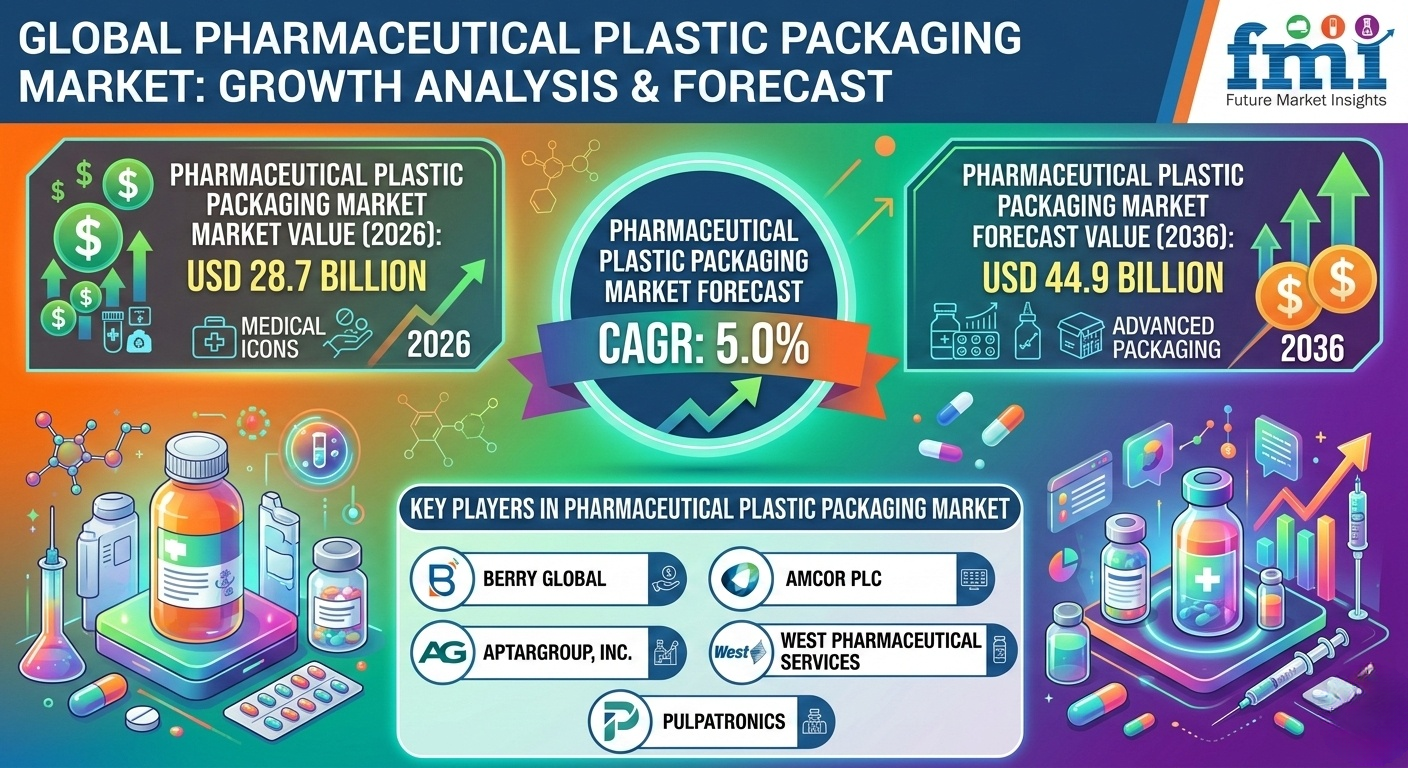
NEWARK, DE, UNITED STATES, March 20, 2026 /EINPresswire.com/ -- The global pharmaceutical plastic packaging market is entering a decisive decade of transformation, where compliance, material innovation, and drug complexity are redefining value creation. Valued at USD 27.4 billion in 2025, the market is projected to reach USD 28.7 billion in 2026 and surge to USD 44.9 billion by 2036, expanding at a steady CAGR of 5.0%.
This growth trajectory signals more than incremental expansion it reflects a structural shift in procurement logic. According to a comprehensive strategic outlook by Future Market Insights (FMI), pharmaceutical companies are no longer purchasing packaging based solely on cost efficiency. Instead, they are investing in “risk mitigation systems” designed to ensure regulatory compliance, product stability, and patient safety in an increasingly complex therapeutic landscape.
Discover Growth Opportunities in the Market – Get Your Sample Report Now
https://www.futuremarketinsights.com/reports/sample/rep-gb-12419
The Compliance Economy: Redefining Procurement Strategy
The pharmaceutical packaging industry is undergoing a fundamental transition from “cost-per-unit” to “cost-of-compliance.” With the rapid rise of biologics, GLP-1 therapies, and sensitive large-molecule drugs, the consequences of packaging failure—such as contamination, leaching, or moisture ingress—can be catastrophic.
This shift is creating a “compliance gate,” where only suppliers capable of delivering validated stability data, serialization, and anti-counterfeit features can compete in high-value segments. Commodity plastic solutions are increasingly confined to generic drug applications, while premium markets demand advanced barrier technologies and integrated delivery systems.
Materiality Shift: From Commodity Plastics to Engineered Barriers
The material landscape is fragmenting as the industry pivots toward high-performance polymers and sustainable alternatives. Traditional materials such as polyethylene continue to dominate volume-driven segments, holding approximately 35% market share due to their cost-effectiveness and chemical stability.
However, innovation is accelerating across advanced materials:
• Polypropylene (PP): Widely used in sterile applications due to heat resistance and autoclavability
• PET (Polyethylene Terephthalate): Gaining traction for liquid formulations with superior oxygen barrier properties
• Bio-based polymers: Emerging as strategic alternatives to meet sustainability mandates
This evolution is further driven by regulatory pressures, particularly in Europe, where mandates are pushing a transition away from PVC toward recyclable and low-carbon materials.
Segment Spotlight: Volume vs Value
Pharmaceuticals Segment (40% Market Share)
The pharmaceuticals segment dominates overall demand, driven by chronic disease prevalence and the global expansion of generic drug production. Standard blister packs and bottles continue to anchor volume growth, particularly in emerging markets.
Biotechnology: The High-Value Frontier
The fastest-growing segment is biotechnology, fueled by injectable therapies and complex biologics. Here, value is shifting from packaging volume to integrated drug delivery systems—including pre-filled syringes and specialized barrier containers.
Companies such as West Pharmaceutical Services and AptarGroup, Inc. are capitalizing on this shift, reporting strong growth in high-value components tailored for biologics and GLP-1 therapies.
Evolving Supply Chain Dynamics: The Rise of “System Solutions”
The competitive landscape is increasingly defined by vertical integration. Leading players are moving beyond standalone packaging products to deliver end-to-end systems, combining materials, device engineering, and regulatory documentation.
For instance, Gerresheimer AG is expanding its capabilities in biologic packaging systems, while Amcor plc continues to invest in material science innovation through global R&D centers.
This transition is reshaping capital allocation across the industry:
• Investment is shifting from generic capacity expansion to specialized assets
• Long-term supply contracts are becoming standard in biologics
• Early supplier engagement is critical to secure compliant packaging solutions
Regional Powerhouses: Asia Pacific Leads Volume Growth
While North America and Europe dominate in value-added innovation, Asia Pacific is emerging as the global engine of volume growth.
India (6.0% CAGR)
India’s pharmaceutical packaging market is expanding rapidly, supported by its position as a leading exporter of generic drugs. The country’s robust manufacturing base and compliance with international standards are driving demand for high-quality packaging solutions.
China (6.5% CAGR)
China continues to lead in both production and regulatory digitization. Government mandates for traceability and electronic submissions are accelerating the adoption of standardized, compliant packaging formats.
United States (4.5% CAGR)
The U.S. market remains a value leader, characterized by strong demand for advanced drug delivery systems and premium packaging solutions that enhance patient adherence and safety.
Sustainability and Regulation: The Twin Forces Shaping the Future
Sustainability is no longer optional—it is becoming a regulatory requirement. The European Union’s Packaging and Packaging Waste Regulation (PPWR) is setting a clear timeline for recyclability, pushing manufacturers to redesign legacy materials.
This has triggered a wave of innovation:
• Development of bio-based polymers and recyclable barrier films
• Reduction of packaging waste and carbon footprint
• Integration of circular economy principles into product design
Startups such as Kelpi are pioneering seaweed-based coatings, offering a glimpse into a post-fossil-plastic future.
Serialization and Smart Packaging: The Digital Layer
Another defining trend is the integration of serialization and track-and-trace technologies. Regulatory mandates across global markets are transforming packaging into a data carrier, enabling:
• Anti-counterfeit protection
• Supply chain transparency
• Real-time product tracking
This convergence of physical and digital capabilities is elevating packaging from a cost center to a strategic asset in pharmaceutical operations.
Competitive Landscape: Scale vs Specialization
The pharmaceutical plastic packaging market is increasingly bifurcated:
Tier-1 Leaders
Global players such as Berry Global and Amcor plc are leveraging scale and vertical integration to dominate high-value segments. Their ability to absorb compliance costs creates significant barriers to entry.
Mid-Tier Specialists
Smaller players are focusing on niche segments such as ophthalmic packaging, plastic tubes, and precision-molded components. These companies often secure long-term contracts with regional pharmaceutical manufacturers.
Innovation-Driven Startups
Emerging companies are disrupting the market with sustainable materials and novel technologies. While currently limited in scale, they are influencing industry direction and attracting acquisition interest from larger players.
Dynamics of the Decade: What Lies Ahead
Looking toward 2036, several key trends will define the industry’s trajectory:
• Biologics Expansion: Continued growth in large-molecule drugs will drive demand for high-performance packaging
• Sustainable Transformation: Bio-based and recyclable materials will become mainstream
• System Integration: Packaging will evolve into a fully integrated component of drug delivery
• Regulatory Complexity: Compliance requirements will intensify, raising entry barriers
• Global Supply Chain Realignment: Asia Pacific will dominate volume, while Western markets lead innovation
Executive Takeaways
• Shift investment toward high-value barrier technologies and biologics-compatible systems
• Prioritize sustainable materials to mitigate future regulatory risks
• Integrate digital serialization capabilities to meet global compliance standards
• Engage suppliers early to secure long-term contracts for advanced packaging solutions
About the Competitive Ecosystem
Key players shaping the pharmaceutical plastic packaging market include:
• Berry Global
• Amcor plc
• Gerresheimer AG
• AptarGroup, Inc.
• West Pharmaceutical Services
• Kelpi
Why FMI: https://www.futuremarketinsights.com/why-fmi
Explore More Research Reports by FMI
Refillable, Low-Waste & Modular Packaging Market - https://www.futuremarketinsights.com/reports/refillable-low-waste-modular-packaging-market
Fast Food Containers Market - https://www.futuremarketinsights.com/reports/fast-food-containers-market
White-Label Computer Peripheral Packaging Market - https://www.futuremarketinsights.com/reports/white-label-computer-peripheral-packaging-market
Modular Packaging Architecture for Recyclability Market - https://www.futuremarketinsights.com/reports/modular-packaging-architecture-for-
recyclability-market
Wooden Toddler Toy Packaging Market - https://www.futuremarketinsights.com/reports/wooden-toddler-toy-packaging-market
About Future Market Insights (FMI)
Future Market Insights, Inc. (FMI) is an ESOMAR-certified, ISO 9001:2015 market research and consulting organization, trusted by Fortune 500 clients and global enterprises. With operations in the U.S., UK, India, and Dubai, FMI provides data-backed insights and strategic intelligence across 30+ industries and 1200 markets worldwide.
Sudip Saha
Future Market Insights Inc.
+1 347-918-3531
email us here
Legal Disclaimer:
EIN Presswire provides this news content "as is" without warranty of any kind. We do not accept any responsibility or liability for the accuracy, content, images, videos, licenses, completeness, legality, or reliability of the information contained in this article. If you have any complaints or copyright issues related to this article, kindly contact the author above.
